Alicia Jane Boswell
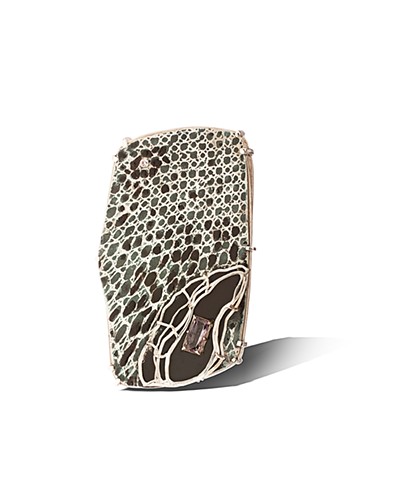
Displacement  I
Brooch:
Recycled sterling silver, vitreous enamel, enamel paint, amethyst, pink CZ, stainless steel, brass 
7.6x3.8x1.9cm
Photographer Steven Brian Samuels Displacement I side view detail
Brooch:
Recycled sterling silver, vitreous enamel, enamel paint, amethyst, pink CZ, stainless steel, brass 
7.6x3.8x1.9cm
Photographer Steven Brian Samuels Parallassein  II
Brooch:
Sterling silver, enamel, fine silver, 18kgold, sapphires, pink tourmalines, chocolate diamond, steel sewing needles, stainless steel
7.6x7.6x.1cm

Displacement  II
Brooch:
Recycled sterling silver, vitreous enamel,  enamel paint, amethyst, pink CZ, stainless steel,  brass 
7.6x3.8x1.9cm
Photographer Steven Brian Samuels Coeval
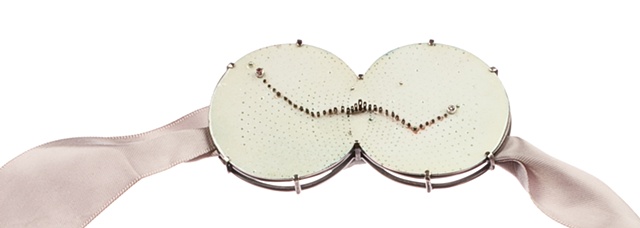
Pendant/Brooch:
Recycled sterling silver, enamel,  sapphire, pink tourmaline, steel sewing needles, silk ribbon, stainless steel 
8.9x5.1x.1cm          
Photographer Steven Brian Samuels Coeval Detail:
Recycled sterling silver, enamel,  sapphire, pink tourmaline, steel needles, silk ribbon, stainless steel
8.9x5.1x.1cm  
Photographer Steven Brian Samuels Idle
Brooch:
Recycled sterling silver, enamel, resin, steel sewing needles, flocking, CZ, stainless steel
6.4x4.4x.1cm 
Photographer Steven Brian Samuels Welt
Brooch:
Recycled sterling silver, fine silver, enamel, sapphires, stainless steel
7.6x5.1x.1cm
Photographer Steven Brian Samuels
New Work 2011/2012
Displacement can occur geographically, circumstantially, emotionally and physically.

This body of work is meant to convey a sense of mourning, fragility, longing and mending in response to personal experiences, occurrences and feelings associated with that of displacement.
Within the framework of contemporary jewelry and adornment which today is so often only viewed or acquired as fashionable completions to a wardrobe, I am using the evocative and lamenting associations of handmade Victorian “mourning” lace. Within this work I am referencing a transitional period or “Half-Mourning”, when black was still worn but slowly replaced by acceptable colors such as lavender and mauve. Specifically influenced by the 18th and 19th Victorian “Huswifs” which were patch-worked oblong pockets or pouches worn hidden under a woman’s dress and usually stitched from scraps of fabric, lace, or calico, these pockets often held important sewing or textile related tools (steel needles) or intimate smaller items such as jewels. With each piece I am calling attention to the hand labored memento, the rituals they evoked, and the layers of intangible personal meaning often encased.
BACK TO WORK